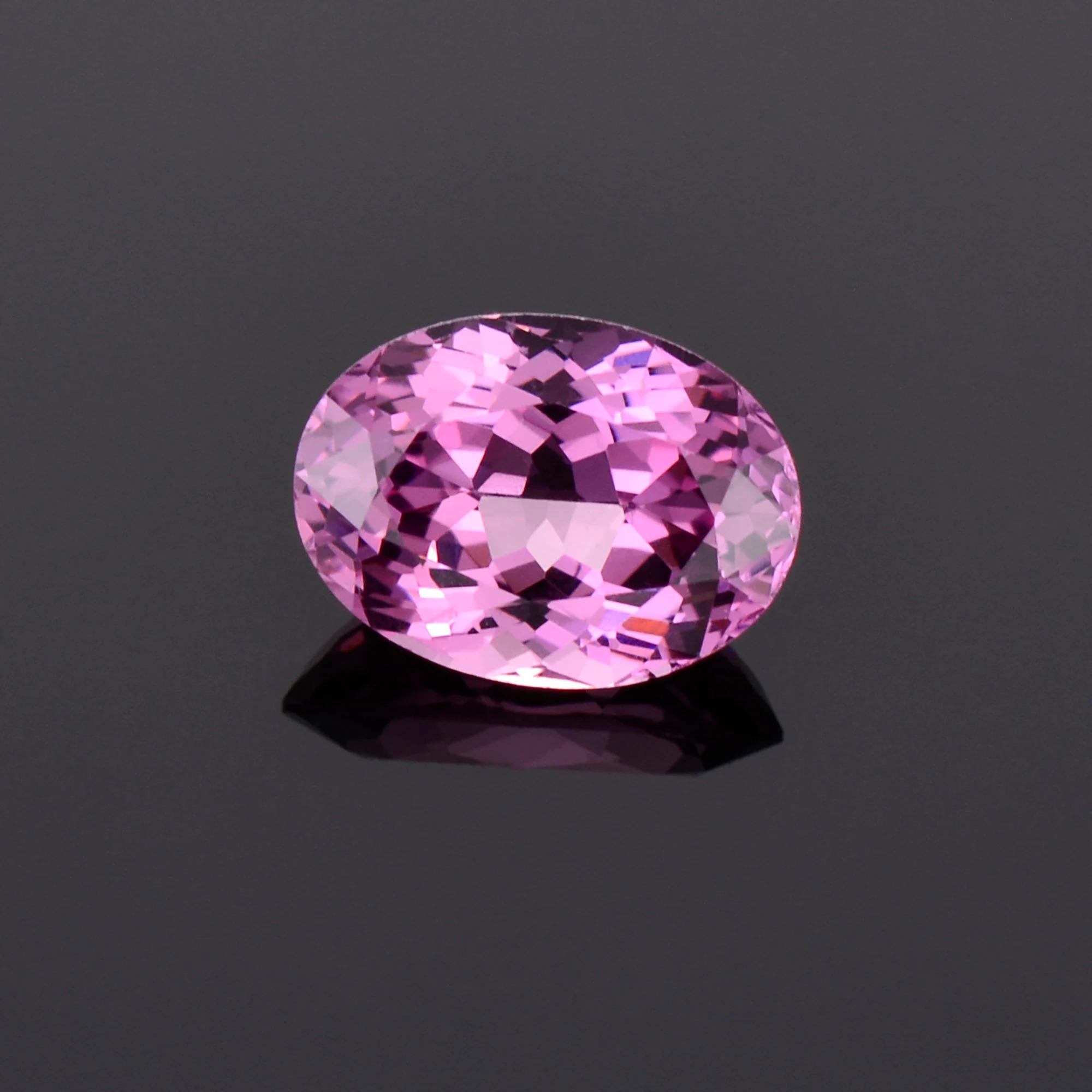
Spinel
Spinel is a fascinating gemstone with a lot of unique qualities. Here's a detailed overview:
Composition and Formation
- Chemical Formula: Spinel is a group of minerals with the general formula [AB2O4][AB_2O_4][AB2O4], where AAA is typically magnesium, iron, or zinc, and BBB can be aluminum, chromium, or other metals.
- Crystal System: Cubic
- Formation: Spinel forms in metamorphic rocks, often in high-temperature and high-pressure environments. It can also be found in alluvial deposits.
Appearance
- Color: Spinel comes in a variety of colors, including red, blue, pink, purple, orange, and even black. The most prized colors are vivid red (often mistaken for ruby) and deep blue.
- Transparency: It can be transparent to opaque.
- Luster: Spinel has a vitreous (glass-like) luster.
- Hardness: On the Mohs scale, spinel ranks 8, making it quite durable and suitable for various types of jewelry.
Properties
- Refractive Index: Typically ranges from 1.718 to 1.732.
- Specific Gravity: Ranges from 3.58 to 3.63, depending on the exact composition.
- Cleavage: Spinel has no cleavage, which contributes to its toughness.
- Fracture: It typically has a conchoidal fracture.
Origin and Sources
- Main Sources: Major deposits are found in Myanmar (Burma), Sri Lanka, Tanzania, and Vietnam. Spinel can also be found in parts of Thailand and the Himalayas.
- Notable Locations: Some high-quality spinels are also found in Madagascar and the Skardu region of Pakistan.
Uses
- Jewelry: Spinel is valued for its vibrant colors and durability. It's used in various types of jewelry, including rings, earrings, and necklaces.
- Industrial Uses: Less commonly, spinel is used in refractory materials and ceramics due to its high melting point and stability.
Historical and Cultural Significance
- Historical Misidentification: Historically, spinel was often mistaken for ruby, especially in the case of some famous gems like the "Black Prince's Ruby," which is actually a large red spinel.
- Cultural Value: Spinel has been cherished in various cultures for centuries, especially in regions where it is found naturally.
Care and Maintenance
- Cleaning: Spinel can be cleaned with mild soap and water. Avoid harsh chemicals and ultrasonic cleaners, which might damage the stone.
- Storage: Store spinel separately from other gemstones to prevent scratching, and keep it in a soft cloth or padded jewelry box.
Spinel’s wide range of colors and impressive hardness make it a versatile and attractive option for gemstone enthusiasts and jewelers alike.
Photo credit from Gorgeous Pink Spinel Gemstone from Sri Lanka, 1.45 cts., 8x6 mm., Oval Shape (kosnargemco.com)
Reference from Mindat.org